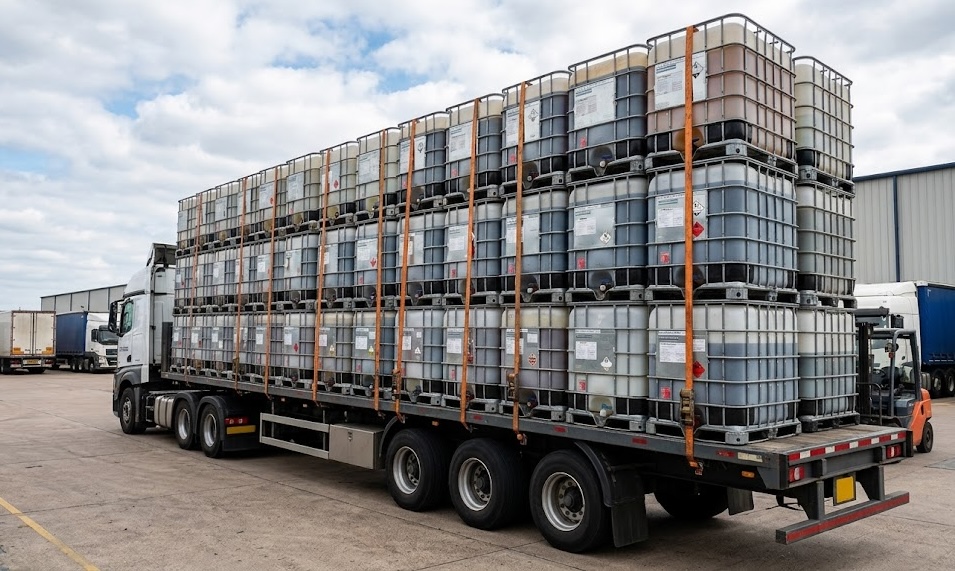
End of the Road Doesn't Mean End of the Material
When an IBC tote reaches true end-of-life — too damaged for reconditioning, too contaminated for reuse — recycling is the responsible answer. Our process ensures that 98% of materials are recovered and returned to the manufacturing stream.
We never send IBC tanks to landfill. Period. Every component — HDPE plastic, galvanized steel, and pallet material — is separated and processed through the appropriate recycling channel.
In the past 12 months alone, our recycling operation has processed over 8,500 end-of-life IBC totes, recovering approximately 468 tons of HDPE plastic, 319 tons of galvanized steel, and 127 tons of wood pallet material. That is 914 tons of material diverted from landfills and reintroduced into manufacturing supply chains — a figure equivalent to removing roughly 1,950 cubic yards of waste from regional disposal streams.
Our recycling program is not just an environmental statement. It is a practical solution for businesses that need to dispose of IBC totes responsibly while maintaining compliance with EPA regulations, Missouri Department of Natural Resources (DNR) requirements, and increasingly strict corporate sustainability mandates. Every tote we recycle comes with full documentation to support your environmental reporting.
Material Recovery by Component
A standard 275-gallon IBC tote weighs between 120 and 145 lbs depending on construction. Here is exactly how the material breaks down and what happens to each component during our recycling process.
| Component | Material | Avg Weight | Recovery Rate | End Use |
|---|---|---|---|---|
| Inner Bottle | HDPE (High-Density Polyethylene) | 55 lbs | 99.2% | Granulated into pellets for drainage pipe, plastic lumber, non-food containers, automotive parts |
| Outer Cage | Galvanized Steel | 37.5 lbs | 99.8% | Baled and sold to steel mills, melted and reformed into new steel products |
| Pallet (wood) | Pine / Hardwood | 22 lbs | 94% | Chipped for mulch, animal bedding, biomass fuel, or repaired and reused as pallets |
| Pallet (steel) | Galvanized Steel | 35 lbs | 99.8% | Processed alongside cage steel through metal recycling stream |
| Valve Assembly | PP/HDPE + Stainless Steel | 2.5 lbs | 97% | Disassembled, plastics recycled separately from metal components |
| Gaskets & Seals | EPDM / Buna-N Rubber | 0.5 lbs | 85% | Processed through rubber recycling into crumb rubber for playgrounds, tracks, and flooring |
| Labels & Adhesives | Paper / Vinyl / Adhesive | 0.3 lbs | 70% | Removed during wash stage, paper fraction recycled, vinyl to energy recovery |
Weights shown are averages for a standard 275-gallon IBC with wood pallet. 330-gallon models weigh approximately 15-20% more. Steel-pallet models weigh approximately 10 lbs more overall.
Our Recycling Process
Our 6-stage recycling process is designed to maximize material recovery while meeting all federal and state environmental regulations. Each stage is documented and auditable.
1. Intake Assessment
Every IBC that arrives at our facility is first assessed for reuse potential. If a tank can be reconditioned, we'll recommend that route — it's always better for the environment. Only tanks that truly cannot be reused enter our recycling stream.
During intake, we log the tote serial number (if legible), prior contents from SDS labels, manufacture date, physical condition, and weight. This data feeds into our tracking system and eventually appears on your certificate of recycling. We process an average of 35 totes per day through intake assessment.
2. Decontamination
Before dismantling, we properly drain and decontaminate the tank. Any residual chemicals are handled according to EPA regulations and Missouri DNR requirements. Wastewater is processed through our treatment system.
Our decontamination bay uses a triple-rinse protocol for totes that contained hazardous materials (RCRA-listed or characteristic wastes). Rinse water is collected in dedicated tanks, tested for pH, heavy metals, and organic compounds, and either treated on-site or manifested to a licensed TSDF (Treatment, Storage, and Disposal Facility) when necessary. Non-hazardous residuals are processed through our closed-loop water treatment system, which filters and neutralizes contaminants before the water is recirculated.
3. Disassembly
The IBC is broken down into its component materials: HDPE bottle, galvanized steel cage, valve assembly, gaskets, and pallet. Each material type is processed separately for maximum recycling efficiency.
Disassembly takes approximately 8-12 minutes per unit using pneumatic tools and hydraulic cutters. The cage is unbolted from the pallet, the bottle is extracted from the cage, and small components (valve, cap, gaskets) are removed and sorted into material-specific bins. Our technicians process 40-50 totes per shift through the disassembly station.
4. HDPE Processing
The HDPE bottle is granulated into plastic flakes or pellets. This recycled HDPE becomes raw material for manufacturing new products — from drainage pipes to plastic lumber to new containers.
Our granulator reduces each bottle to uniform 8-12mm flakes in under 90 seconds. The flakes are then washed in a float-sink tank to remove any remaining contaminants, dried in a centrifugal dryer, and bagged in 1,000-lb supersacks for shipment to plastics manufacturers. Clean HDPE flake from IBC bottles currently trades at $0.18-$0.28 per pound depending on color and purity, making it one of the most valuable post-consumer plastics on the market.
5. Steel Recovery
Steel cages are baled and sent to steel recyclers where they're melted down and reformed. Steel is infinitely recyclable with no loss of quality, making it one of the most sustainable materials in the IBC construction.
We use a hydraulic baler to compress 10-12 cage frames into a single bale weighing approximately 400-450 lbs. Bales are staged on-site until we have a full truckload (approximately 40,000 lbs / 18 metric tons), then shipped to regional steel mills. Recycling one ton of steel saves 2,500 lbs of iron ore, 1,400 lbs of coal, and 120 lbs of limestone. Over the past year, our steel recovery operation alone has conserved an estimated 399 tons of iron ore.
6. Documentation & Certification
We provide certificates of recycling for your environmental compliance records. This documentation proves responsible disposal and can support your company's sustainability reporting.
Each certificate includes: date of processing, number of units recycled, total weight by material type, material destination (recycler name and location), recovery percentage achieved, and our facility license number. Certificates are issued within 5 business days of processing and are available in digital (PDF) or printed formats. We retain copies for a minimum of 7 years and can provide duplicates at any time for audits or regulatory inquiries.
Environmental Impact
Recycling IBC totes creates measurable environmental benefits. Here is the impact of recycling a single standard 275-gallon IBC compared to landfill disposal.
CO2 Emissions Avoided
Recycling one IBC tote avoids approximately 92 lbs of CO2 equivalent emissions compared to producing new HDPE and steel from virgin materials. Across our annual volume of 8,500 totes, that equates to roughly 391 metric tons of CO2 avoided — the equivalent of taking 85 cars off the road for a full year.
Energy Savings
Manufacturing HDPE from recycled resin uses 88% less energy than producing it from petroleum feedstock. For steel, recycling uses 74% less energy than smelting from iron ore. Each recycled IBC saves approximately 18.5 kWh of energy — enough to power an average American home for 15 hours.
Water Conservation
Producing new HDPE requires approximately 1.5 gallons of water per pound of resin. By recycling the HDPE from a single IBC bottle, we conserve roughly 82 gallons of process water. Our closed-loop rinse system uses an additional 85% less fresh water than traditional open-drain washing methods.
Landfill Diversion
A single IBC tote occupies approximately 50 cubic feet of landfill space when disposed of as waste. At our current recycling volume, we prevent over 425,000 cubic feet of landfill usage per year — equivalent to filling a football field to a depth of nearly 5 feet.
Compliance & Certifications
Our recycling operations meet or exceed all applicable federal, state, and industry standards. We maintain active compliance with the following regulatory frameworks and certification programs.
EPA RCRA Compliance
We operate under full compliance with the Resource Conservation and Recovery Act (RCRA) for the handling and processing of containers that previously held hazardous materials. Our facility maintains a valid EPA ID number, and we follow all generator requirements including proper characterization, storage time limits (90-day accumulation), manifesting, and recordkeeping.
Missouri DNR Solid Waste Permit
Our facility operates under a Missouri Department of Natural Resources solid waste processing permit. We submit annual reports on volumes processed, material recovery rates, and waste disposition. Our permit allows us to process up to 15,000 IBC totes per year — well within our current operating capacity with room for growth.
DOT Hazardous Materials Training
All staff involved in receiving, handling, and transporting IBC totes with residual hazardous materials hold current DOT hazmat training certifications (49 CFR 172 Subpart H). Training is renewed every 3 years as required by federal regulation. Our drivers carry HM-126F training documentation on every pickup involving totes with prior hazmat use.
OSHA Workplace Safety
Our facility meets all OSHA standards for plastics processing and metal recycling operations. We maintain an Experience Modification Rate (EMR) of 0.87, well below the industry average of 1.0. Our recordable incident rate for the past 3 years is 1.2 per 200,000 hours worked, compared to the industry average of 3.4.
R2 (Responsible Recycling) Aligned
While R2 certification is primarily associated with electronics recycling, we align our operations with R2 principles including environmental management, health and safety, downstream vendor auditing, and data tracking. We audit our downstream recycling partners annually to verify that materials we ship are processed responsibly rather than exported or landfilled.
How We Compare
Not all recyclers are created equal. Here is how our IBC recycling operation compares to industry averages and typical alternatives.
| Metric | St. Louis IBC Recycle | Industry Average | Landfill Disposal |
|---|---|---|---|
| Material Recovery | 98% | 78-85% | 0% |
| Processing Time | Same day | 3-7 days | Same day (no processing) |
| Documentation | Full CoR within 5 days | Basic receipt | Disposal manifest only |
| Downstream Auditing | Annual vendor audits | Rare | N/A |
| Water Usage (per tote) | Under 15 gal | 50-100 gal | 0 gal (no decontamination) |
| Free Pickup Threshold | 10+ totes | 25-50 totes | Typically no pickup |
| Cost to Generator | Free or we pay you | $5-15 per tote | $25-50 per tote (disposal fee + transport) |
What We Accept
We accept virtually all types of IBC totes for recycling, regardless of condition or prior contents. Here is a detailed breakdown of what we can process.
Accepted Without Restriction
- Totes that held food-grade products (oils, syrups, juices)
- Totes that held soaps, detergents, and cleaning solutions
- Totes that held agricultural chemicals (fertilizers, herbicides)
- Totes that held water, glycols, or coolants
- Physically damaged totes (cracked, crushed, sun-damaged)
- Totes with missing valves, caps, or damaged cages
Accepted with Prior Notification
- Totes that held hazardous chemicals (requires SDS documentation)
- Totes with unknown prior contents (we test before processing)
- Totes that held flammable liquids (solvents, fuels, alcohols)
- Totes that held corrosive materials (strong acids or bases)
- Totes with significant residual product (more than 1 inch depth)
- Non-standard IBC configurations (composite, stainless steel)
Need Recycling Services?
Whether it's one tank or a hundred, we'll handle the recycling responsibly. Free pickup available for 10+ units in the St. Louis area.
Every tote comes with a Certificate of Recycling documenting material recovery and responsible processing. Average turnaround from pickup to certificate: 7 business days.
Schedule Pickup